
Beginning Phonics: Learning Letter Sounds
Children learn best when they are actively involved in the learning process.
Meet the Letter Friends
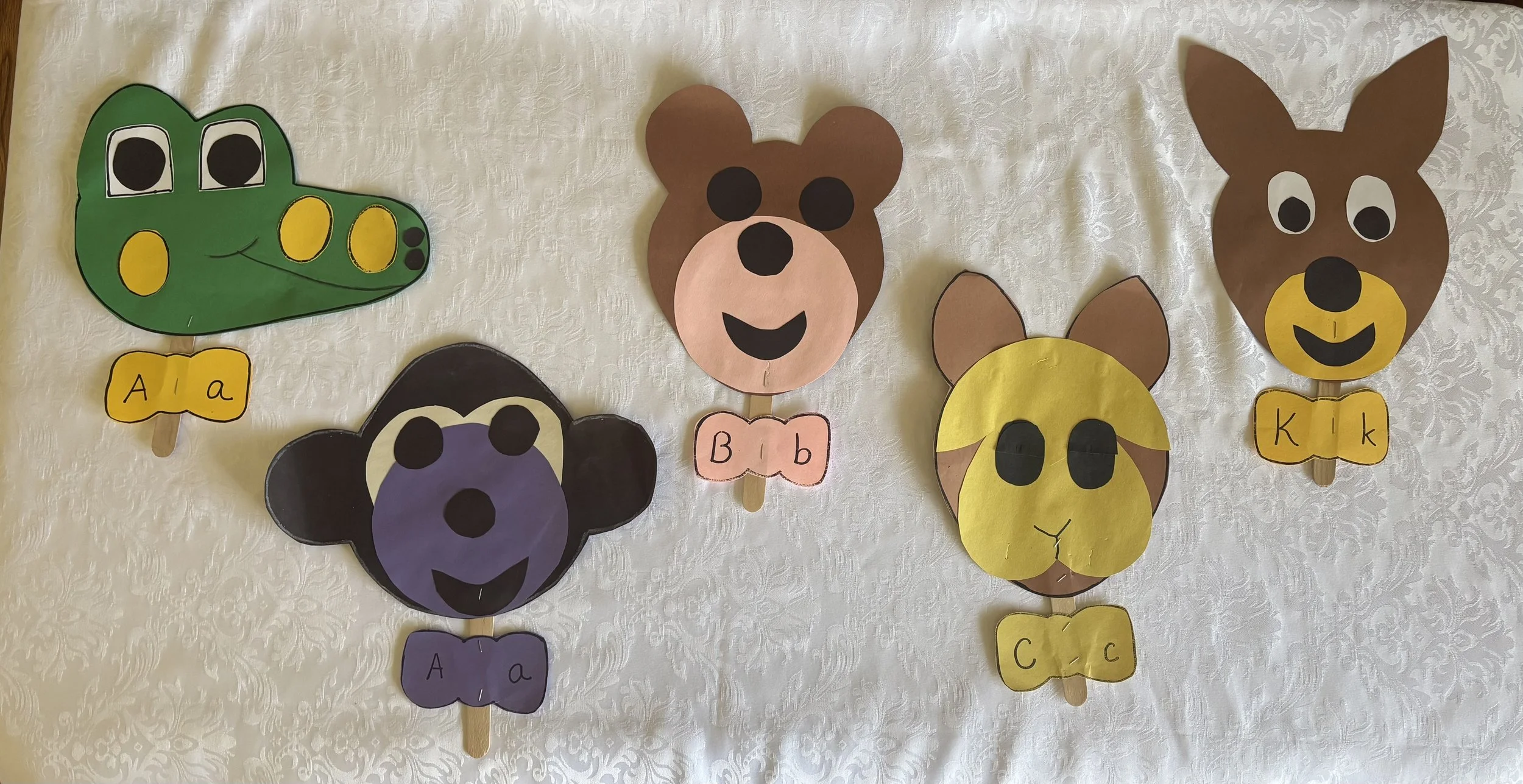
Every Letter Friend has one important Job to Do…to help your child remember a letter sound.
Rather than simply looking at letters on a page, your child will cut, assemble, and interact with each new Letter Friend
As each new Letter Friend is introduced, your child begins to build a collection of familiar learning companions. Before long, these Letter Friends become trusted guides that help your child remember letter sounds with confidence.
Begin each day by singing the ABC song together
Repeat again, but this time say the letters instead of singing
Use a simple pointer—like a wooden spoon—and point to each letter as you say it
As your child becomes more comfortable, try saying the letters backwards to break up the routine and help them learn the letters out of order
Introduce the Vowels
Add in your Letter Friends
Let's Put It All Together into a
Daily Phonics Routine
Let's meet a few of your new Letter Friends!
Alligator Ann says, "aah, aah, aah."
Amy Ape says, "A, A, A."
Bobby Bear says, "buh, buh, buh."
Camel Cal says, "cuh, cuh, cuh."
Katy Kangaroo says, "kuh, kuh, kuh."
Start Your Daily Phonics Routine
with the
ABC’S and the Letter Friends
Vowels are very important—every word and every syllable must have a vowel
Point to the vowels and say them together:
A, E, I, O, U… and sometimes Y“These are the vowels… these are the vowels—everything else is a consonant!”
Begin Each Week with a New Letter Friend
Each week, introduce a New Letter Friend Sound, ( for vowels create one on Monday and the other on Wednesday , Do the same for C & K. Throughout week you might focus on other activities that highlight this letter sound)
Together, build your new Letter Friend, practice its sound, and add it to your growing collection.
Once your new Letter Friend has been introduced, it becomes part of your Daily Letter Sound Routine. Every day, bring out all of your Letter Friends and include them in your daily routine.
Week by week, your child's collection grows and so does their confidence.
Now, you've gathered the pieces your child needs to begin building a strong reading foundation.
You have:
your ABC review,
your color words,
your growing collection of Letter Friends, and
a simple way to practice letter sounds every day.
Now it's time to bring those pieces together into one easy daily routine.
Children learn best through short, consistent practice. You don't need long lessons or elaborate activities. Just a few minutes each day, following the same familiar routine, will help your child gain confidence as new letter sounds are introduced..
Let's begin your Daily Letter Sound Routine.
As your child learns each new letter, you'll build a Letter Sound Activity Kit together. Each kit includes everything you need for one letter lesson and becomes part of your child's daily reading routine.
As you cut, assemble, and practice together, your child is not only learning letter sounds but they are also strengthening fine motor skills, learning to follow directions, building vocabulary, and gaining confidence through hands-on learning.
Each completed Letter Friend becomes another tool that you will use again and again during your daily letter sound routine.
You can introduce sounds like:
aa aa for Alligator Ann
A A A for Amy Ape
buh buh buh for Bobby Bear
cuh cuh cuhfor Camel Cal
kuh kuh kuh for Katy Kangaroo
Start with the First Five Letter Friends
These five Letter Friends are the perfect place to begin your child's letter sound journey. They were carefully chosen to introduce the routine in a simple, manageable way while giving both you and your child time to become comfortable with the process.
To make getting started easy, the First Five Letter Friends are available in two formats.
For busy parents, choose the Ready-to-Assemble Kit. Everything is prepped and organized, so you can begin creating your Letter Friends right away.
If you enjoy preparing your own materials, the Downloadable Version lets you print, cut, and assemble the Letter Friends yourself.
Because I believe children learn best when an adult models each activity first, every Ready-to-Assemble Kit also includes a FREE Parent Demonstration Set. Assemble your own Letter Friends right along with your child, creating theirs while following your example. This simple step builds confidence and makes the activity more successful and enjoyable.
The First Five Letter Friends were designed especially for Pre-K and Kindergarten children who are just beginning to learn letter sounds.
Working with an older child who still struggles with letter sounds? Don't worry—I have a version designed specifically for older learners that teaches the same essential skills in an age-appropriate way.
About Mrs. Bee's Learning Studio
Mrs. Bee's Learning Studio creates printable phonics, reading, and comprehension resources for homeschool families, parents, and elementary teachers. Every activity is designed by a veteran elementary reading teacher with over 24 years of classroom experience to help children become confident readers.